Preventing Moisture Damage on Floors: Essential Tips
When it comes to flooring, moisture is the silent enemy. It creeps in after storms, seeps up through basements, and sneaks behind walls—causing damage that’s costly and tough to repair. You want beautiful floors that last. But without the right protection, even the best floors can warp, crack, or grow mold.
At MMV Flooring, we see the full picture. Whether you’re dealing with hardwood in your living room, tile in your basement, or epoxy in your garage, every material faces its own risks. Knowing how to prevent moisture damage is your best defense.
Why Moisture Is a Threat to Every Type of Flooring
Moisture doesn’t discriminate. It moves through concrete, sneaks under tiles, and sits quietly beneath carpets. Left unchecked, it can turn a solid oak floor into a creaky, swollen mess or leave luxury vinyl tiles curling at the edges.
Here’s how different floors react:
- Hardwood: Swelling, cupping, buckling, and permanent stains.
- Laminate: Warping, bubbling, or separating at seams.
- Basement & Garage Flooring: Mold, mildew, spalling concrete, and odors.
- Carpet: Musty smells, mold growth, and weakened adhesives.
- Luxury Vinyl (LVT/LVP): Curling edges, lifting, or discoloration.
- Tile & Grout: Efflorescence (white powder), loose tiles, and cracked grout.
Moisture can sneak in fast—after a summer storm, a burst pipe, or even just steady humidity. The damage can be slow and subtle, or sudden and severe.
Quick Safety Checklist for Storm & Flood Season 🛑
Worried about seasonal storms or spring flooding? Take these steps each year:
- Inspect outside drains and gutters—clear blockage so water flows away from your home.
- Check basement windows, doors, and walls for cracks or leaks.
- Lift rugs and mats in entryways before big storms.
- Test sump pumps and backup battery systems.
- Place absorbent mats or towels near vulnerable doors.
- Move valuables and electronics off the floor if flooding is possible.
- Store flooring materials and chemicals on shelves, not directly on concrete.
- Keep a flashlight and basic tools nearby for emergencies.
A little prep now can save your floors later.
DIY vs. Call a Pro: What Can You Safely Handle?
Some fixes are within reach if you’re handy. But moisture is tricky. It hides in places you can’t see.
DIY wins:
- Installing a dehumidifier to control indoor humidity.
- Laying down temporary plastic sheeting in a pinch.
- Sealing visible cracks in basement walls with appropriate caulk.
- Cleaning and drying small spills right away.
Call MMV Flooring or a qualified pro for:
- Persistent dampness, warped flooring, or musty odors.
- Projects like full Flooring Removal near you, subfloor repair, or radiant floor heating installation.
- Installing moisture barriers, especially under hardwood, tile, or basement floors.
- Large-scale water intrusion or after any flooding event.
Trying to DIY what should be a pro job can cost more in the long run. Water damage isn’t always visible—but it can mean trouble under the surface.
What Pros Do When They Arrive
When we arrive at MMV Flooring, we get right to the heart of the problem.
Our step-by-step approach:
- Inspect all floors, baseboards, and subfloor layers for hidden moisture.
- Use moisture meters and thermal imaging to find water you can’t see.
- Check for signs of mold, mildew, or compromised adhesives.
- Identify sources—roof leaks, plumbing, cracks, or condensation.
- Recommend industry-approved solutions, like ASTM vapor barrier standards or National Wood Flooring Association guidelines.
- Provide honest advice—sometimes you need a full Flooring Removal, other times a targeted repair.
We document everything and map out a plan you can trust.
Prevention & Maintenance: Your Long-Term Strategy
Protecting your floors goes beyond a quick fix. It’s about habits and smart choices.
Use Moisture Barriers
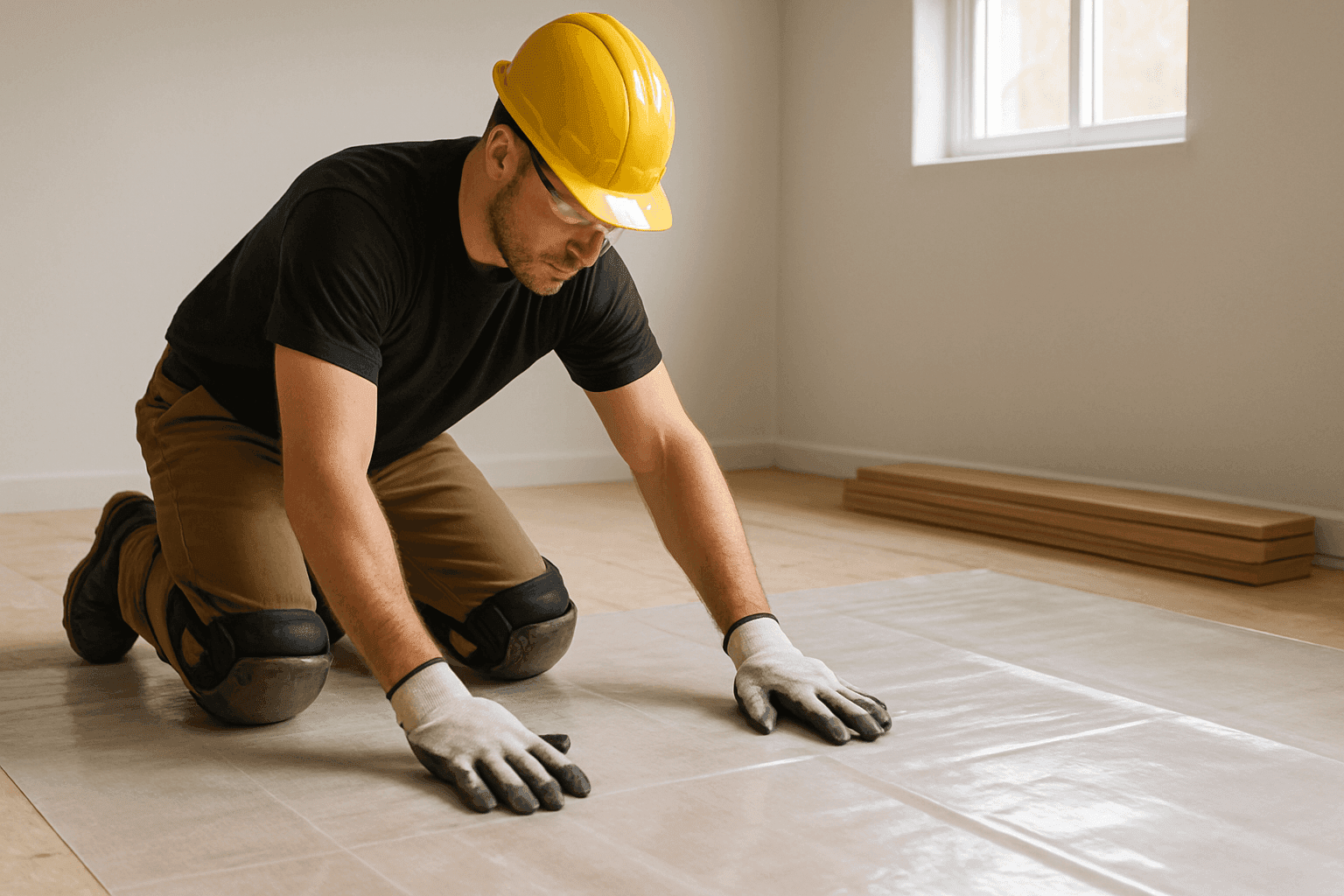
- Under Hardwood/Laminate: Install a vapor barrier before laying planks. It’s like a raincoat for your floor.
- Basements & Garages: Use heavy-duty polyethylene sheets or specialized coatings on concrete.
- Bathrooms & Kitchens: Opt for waterproof underlayment beneath tiles or LVT.
Prep Your Subfloor
- Level, dry, and clean before installation.
- Repair cracks, holes, or uneven spots.
- Never install hardwood or laminate over a wet subfloor—wait until it’s dry.
Choose the Right Materials
- Pick water-resistant or waterproof flooring for basements, bathrooms, and kitchens.
- Consider epoxy or sealed concrete for garages and commercial areas.
- Use luxury vinyl tile or plank where spills are common.
Control Indoor Humidity
- Keep relative humidity between 30-50% year-round (ASHRAE recommendations).
- Run a dehumidifier in damp spaces.
- Use exhaust fans when cooking or showering.
Routine Maintenance
- Clean up spills immediately—don’t let water sit.
- Regularly inspect grout, seals, and caulk for cracks.
- Clean and reseal grout lines every 1-2 years.
- Schedule annual professional floor inspections for peace of mind.
Costs & Time Factors: What to Expect
Every project is unique, but here’s what often shapes cost and timing:
- Type of flooring: Hardwood repairs may cost more than vinyl patching.
- Extent of damage: Minor repairs are quick; major water damage can mean days of work.
- Preparation needed: Removing old materials, drying out subfloors, or installing new vapor barriers adds time and investment.
- Location: Basement and garage jobs can be more complex due to access and moisture sources.
Flooring Removal near you may take a day for a small space, or several days for larger jobs—especially if moisture has affected the subfloor.
When It’s an Emergency 🆘
Act fast if you notice:
- Standing water on any floor.
- Sudden buckling, warping, or lifting planks.
- Soggy, musty-smelling carpet.
- Visible mold anywhere on or under your floors.
Turn off water at the source. Move valuables. Call a pro as soon as possible. Mold can begin to grow within 24–48 hours, turning a small problem into a major headache.
FAQ: Moisture & Flooring
How can I tell if my subfloor is wet?
Look for bouncy spots, musty odors, or floors that feel cold and damp. A professional can use a moisture meter for a sure answer.
Is waterproof flooring really “waterproof”?
Luxury vinyl, tile, and epoxy flooring resist water well, but no material is indestructible. Proper installation and sealing are key.
Will insurance cover water damage to my floors?
It depends on the cause and your policy—sudden events like burst pipes are often covered, but gradual seepage may not be.
How often should I check for moisture?
Twice a year is a good rule—especially before and after storm season.
Local & Seasonal Considerations
Rainy springs, humid summers, freezing winters—every season brings its own flooring challenges. After winter thaws or heavy rain, basements and garages are especially at risk. Keep an eye out for new cracks, condensation on windows, or changes in your floor’s feel.
If you’re in an area with frequent storms, flooding, or high humidity, schedule regular floor inspections. Prevention is always less expensive than repair.
A little effort now protects your investment for years to come. For pro flooring advice, inspections, or moisture solutions, Call MMV Flooring now — or reach us anytime at 855-500-2856 .